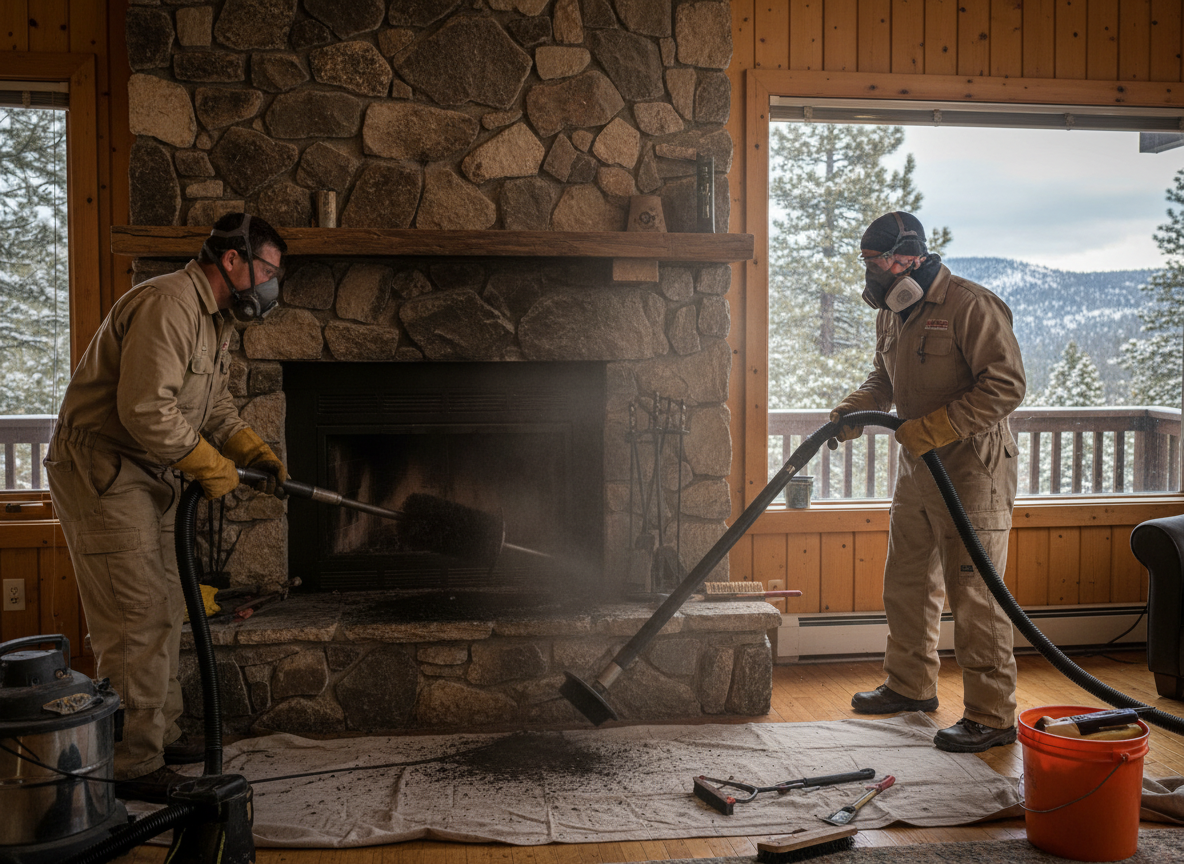
Soot from structure fires in Cedarpines Park clings to the rough-sawn beams and tongue-and-groove ceilings common in 1960s-1980s cabins. Because winters bring snow and freeze-thaw cycles, any moisture left behind turns acidic soot into a permanent stain on pine and cedar. Technicians start with dry HEPA vacuuming from the top down, then apply pH-adjusted alkaline sponges that lift carbon without driving residue deeper into the grain.
Airflow in these hillside homes often pulls soot into wall cavities and under subfloors when doors are opened during winter storms. We isolate each room with negative air machines before work begins, then seal registers and return ducts so loosened particles do not travel to unaffected areas near Crestline or Lake Arrowhead. After cleaning, we run a moisture meter on every surface; any reading above 12 percent triggers additional drying to prevent secondary mold growth once snowmelt raises indoor humidity.
Older electrical boxes and recessed lighting in San Bernardino County mountain properties trap fine soot that later causes arcing. We remove cover plates, vacuum inside boxes, and wipe conductors with lint-free cloths before reinstalling. Homeowners are advised to leave HVAC systems off until we confirm filter housings are clear, because running the furnace on the first cold night after a fire can redistribute microscopic particles throughout the living space.
Final clearance includes white-cloth testing on multiple surfaces and a walk-through with the homeowner to point out any remaining discoloration that may require a second pass. Because Cedarpines Park sits at elevation, equipment must be staged on the street and carried in; this adds time but ensures no heavy carts damage the steep driveways common on Crest Forest Drive.
Technician insight
In Cedarpines Park the thing that catches most people out with soot removal is how snowmelt seeps into the unsealed pine beams of older cabins along Crest Forest Drive, turning light soot into a bonded stain that needs repeated alkaline passes before the surface accepts paint.
Soot from a chimney backdraft in a two-story cabin
Fine black residue coated the living room and second-floor bedrooms after a winter backdraft. We found the soot had traveled through open ceiling joists into the attic insulation. Dry vacuuming followed by targeted alkaline sponging on the exposed beams cleared the residue; we left the insulation for the homeowner's insulation contractor to replace once the space dried.
How it works
- 1
Site Isolation
Set up containment and negative air to prevent soot migration through the home.
- 2
Dry Removal
HEPA vacuum all surfaces from ceiling to floor before any liquid cleaning begins.
- 3
Chemical Cleaning
Apply pH-adjusted solutions matched to the soot type found in the structure.
- 4
Inspection and Clearance
White-cloth test and moisture check before releasing the space for occupancy.
Pricing
Cost depends on square footage affected, soot type, and how many stories require equipment carry-in on mountain lots.